|
Voyager dans les rubriques
Idées
Auteurs
Histoire
Philosophie, économie, religions
Dans le monde
Débats
Brèves
English, Português, Castellano, Italiano, Farsi
|
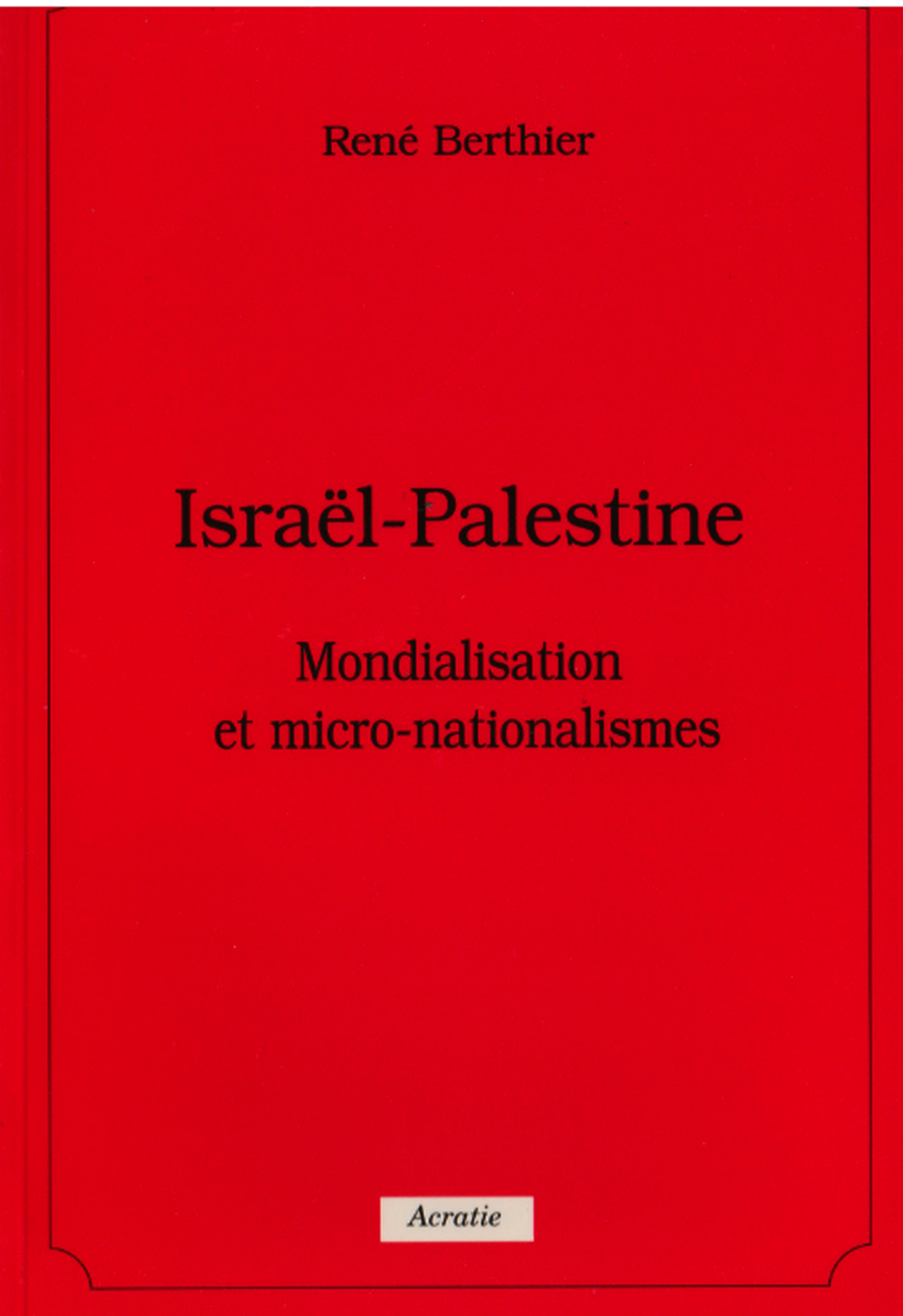
1998 : “ISRAEL-PALESTINE : GLOBALISATION AND MICRONATIONALISMS” – PALESTINIAN AUTONOMY AND AUTHORITY
Article mis en ligne le 20 octobre 2025
par Eric Vilain
After the Gulf War, Bush’s New World Order sought to achieve a peaceful solution to the Israeli-Palestinian conflict and claimed to be denouncing double standards. All this, formally of course. Indeed, while the industrial powers were the driving force behind the Gulf War, it probably could not have taken place without the participation, albeit symbolic, of many Third World states.
This participation could only be obtained through unprecedented pressure, particularly economic pressure on heavily indebted countries. This was particularly the case with Egypt, but also with many African countries. When, in 1990, the Egyptian president wanted to offer mediation to prevent a war with Iraq, the Washington Post editorialist wrote : “Having first tried to play the mediator, President Hosni Mubarak now seems to want to buy time. Washington has a right to expect better from a country that accepts 2 billion from the United States every year...”
Those states that were reluctant to do so paid dearly after the war : this was the case with Yugoslavia and India. The selective application of international law had been so crude, so obvious, the UN resolutions had been so flouted by some – Israel in particular – and their application had been so rigorously demanded of others, that once the war was over, it was necessary to redress the balance a little, at least formally, to calm public opinion in Third World countries.
|

